

The Arts and Crafts color palette is one of those things I keep coming back to because it just works. Born from a philosophy that genuinely valued natural materials and living in harmony with the environment, these colors have stayed remarkably relevant for well over a century now. Unlike the sugary pastels of Victorian homes or the cold whites of modernist spaces, the Arts and Crafts palette pulls directly from the world outside your window: earth, stone, forest, and field. There’s a reason these shades never really go out of style.
The Philosophy Behind Arts and Crafts Colors
Probably should have led with this section, honestly, because the whole palette makes so much more sense once you understand the thinking behind it. Gustav Stickley, the movement’s most influential American voice, wrote about color constantly in his magazine “The Craftsman.” He pushed for colors that were “in harmony with the woodwork” and that created “a sense of repose and restfulness.” The whole idea was never to shout at you from the walls — it was to build a backdrop where natural materials and handcrafted objects could actually shine.
The Arts and Crafts color philosophy boiled down to a handful of guiding principles:
- Nature as Guide: Every color should be something you could find in the natural world
- Muted Over Bright: Subdued tones beat vivid hues every time
- Harmony with Wood: Colors should complement, not fight with, natural wood tones
- Timeless Over Trendy: Pick colors that’ll still look good in twenty years
- Regional Appropriateness: Colors should reflect the landscape right outside your door
The Core Arts and Crafts Color Palette
Greens: The Foundation
Green was hands-down the most important color in the Arts and Crafts world, showing up in dozens of variations. If you only take one thing away from this section, it’s that green was everything to these designers:
- Olive Green: The quintessential Craftsman color — you’ll find it on walls, trim, and textiles throughout period homes
- Moss Green: A touch grayer than olive, brilliant for creating that calm, forest-like atmosphere
- Sage Green: Lighter and more subtle, and honestly my personal favorite for bedrooms and smaller spaces
- Forest Green: Deep and rich, typically reserved for accent walls or in libraries and studies
- Verdigris Green: That gorgeous blue-green you see on aged copper, popular for trim and decorative elements
These greens paired beautifully with the oak, mahogany, and other dark woods that were everywhere in Craftsman interiors. They provided contrast without harshness — a balance that’s genuinely hard to achieve with other color families.
Browns: Earth and Wood
Browns covered a wide range, from the lightest tans to the deepest chocolates:
- Tobacco Brown: Warm, medium brown with slight red undertones — one of those colors that just feels cozy
- Burnt Umber: Rich and deep with hints of red and orange running through it
- Tan/Khaki: Light neutral browns that work perfectly in larger spaces where darker shades might feel oppressive
- Chocolate Brown: Deep, saturated brown for when you want something dramatic
- Taupe: That gray-brown that bridges cool and warm palettes — incredibly versatile
Golds and Yellows: Warmth and Light
Yellow tones brought warmth into rooms without being overly bright or attention-grabbing:
- Ochre/Mustard: Earthy yellow with brown undertones — I’ve used this in my own kitchen and it just glows in morning light
- Golden Yellow: Warm but muted, like autumn leaves catching late afternoon sun
- Butter Yellow: Soft, creamy yellow that’s ideal for kitchens and breakfast rooms
- Amber: Orange-yellow inspired by the art glass that was so popular in Craftsman homes
Reds: Accents and Warmth
Reds showed up less often but packed a real punch when they did:
- Burgundy: Deep wine red, a classic choice for dining rooms and libraries
- Brick Red: Earthy red-orange that echoes terracotta and natural clay
- Rust: Orange-red with brown undertones that feels thoroughly autumnal
- Terra Cotta: Clay-inspired red-brown that connects the interior to the earth outside
Blues: Sky and Distance
Blues were the least common of the main palette colors, but still perfectly period-appropriate when used thoughtfully:
- Slate Blue: Gray-blue inspired by natural stone
- Colonial Blue: A muted medium blue that plays well with wood tones
- Navy: Deep blue used sparingly as an accent
- Teal: Blue-green that bridges two of the palette’s major color families
Neutrals: Foundation and Balance
Neutral tones did the heavy lifting in keeping everything balanced:
- Cream: Warm off-white — never, ever pure white in a Craftsman home
- Ivory: Slightly more yellow than cream, equally warm
- Natural Linen: Beige with a subtle texture quality to it
- Parchment: Warm tan-cream that reads as effortlessly old-fashioned
- Stone Gray: Warm gray with a hint of brown — nothing like the cool grays that are popular now
Room-by-Room Color Applications
Living Rooms and Common Areas
Living spaces got the richest, most layered color treatments in a Craftsman home:
- Walls: Moss green, sage, or warm taupe
- Trim: Natural wood (oak, fir) or cream
- Ceiling: Cream or parchment, often with exposed wood beams adding character
- Accent Colors: Burgundy, rust, or deep forest green woven in through textiles
A classic combination that I’ve seen done beautifully in restored homes: olive green walls, natural oak trim and built-ins, cream ceiling, and accents in burgundy and amber scattered through cushions, rugs, and pottery.
Dining Rooms
Dining rooms were where people weren’t afraid to go darker and more dramatic:
- Walls: Deep burgundy, chocolate brown, or forest green
- Trim: Dark stained wood or deep cream
- Ceiling: Cream or light tan to keep the room from feeling like a cave
- Wainscoting: Natural wood or painted to match the trim
Those darker colors created real intimacy and made Arts and Crafts lighting fixtures look even more dramatic against the deep background.
Kitchens
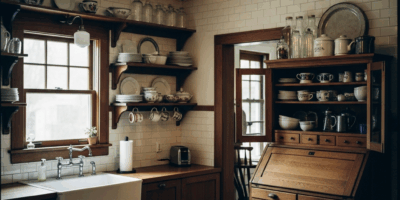
Kitchens struck a balance between warmth and practicality:
- Walls: Butter yellow, cream, or soft sage
- Cabinets: Natural oak or painted cream/sage
- Ceiling: Cream or white for maximum brightness where you’re actually working
- Accents: Copper, brass, or terracotta in tiles and hardware for that hand-crafted feel
Check out our complete guide to 1920s Craftsman kitchen design for way more detail on color applications in the kitchen.
Bedrooms
Bedrooms leaned into the softest, most restful end of the palette:
- Walls: Soft sage, light tan, or warm gray
- Trim: Cream or natural wood
- Ceiling: Cream or ivory
- Textiles: Natural linens, muted florals in period-appropriate colors
Window treatments in natural fabrics completed that serene atmosphere — take a look at our guide to period-appropriate curtains if you’re going down that road.
Bathrooms
Bathrooms kept things lighter and more hygienic-feeling:
- Walls: Cream, ivory, or light sage
- Tile: White subway tile with colored accent tiles — a combo that’s come back hard in recent years
- Trim: Painted wood in cream or soft muted colors
- Fixtures: Pedestal sinks and vintage-style hardware
Exterior Colors
Craftsman exteriors used earth tones that were meant to blend with the surrounding landscape rather than compete with it:
- Body: Warm browns, olive greens, or tans
- Trim: Cream, ivory, or a contrasting earth tone
- Accents: Deep burgundy, forest green, or terra cotta on doors and shutters
- Stone/Brick: Natural materials left unpainted whenever possible — the whole point was celebrating natural beauty
Color Combinations That Work
Classic Craftsman Combinations
The Traditional:
- Olive green walls
- Natural oak trim and built-ins
- Cream ceiling
- Burgundy and amber accents
The Subtle:
- Warm taupe walls
- Cream trim
- Ivory ceiling
- Moss green and rust accents
The Bold:
- Deep burgundy walls (dining room territory)
- Natural dark wood trim
- Cream ceiling
- Gold and forest green accents
The Light:
- Sage green walls
- White or cream trim
- White ceiling
- Natural wood furniture provides the color punch
Three-Color Rule
Craftsman interiors typically stuck to three main colors, and honestly this rule still holds up:
- Dominant Color (60%): Your wall color — it sets the mood
- Secondary Color (30%): Trim, built-ins, or major furniture pieces
- Accent Color (10%): Textiles, art, pottery, and decorative objects
This formula created real visual interest without descending into chaos. It’s a guideline I still recommend to anyone doing a room makeover, Craftsman or not.
Modern Paint Colors Matching Period Hues
The good news is that several paint manufacturers now offer colors that match the Arts and Crafts palette pretty closely:
Sherwin-Williams
- SW 6167 Rookwood Dark Green: Nails that perfect olive green
- SW 2835 Rookwood Shutter Green: Deep forest green that looks incredible on exterior trim
- SW 2805 Renwick Golden Oak: Warm golden tan with real depth
- SW 2807 Renwick Heather: A dusty rose-brown that’s surprisingly versatile
- SW 2816 Rookwood Medium Brown: Rich tobacco brown that works in so many rooms
Benjamin Moore
- HC-110 Salisbury Stone: Beautiful warm taupe
- 221 Huntington Green: Classic sage that never disappoints
- 243 Autumn Bronze: Warm brown with gold undertones — one of my favorites
- 2074-10 Claret Rose: Burgundy for when you want drama
- 232 Bleeker Beige: A solid neutral tan foundation color
Farrow & Ball
- Calke Green: Deep olive that’s worth every penny of their premium pricing
- French Gray: Warm neutral gray with real character
- Eating Room Red: Classic brick red — and yes, the name is that specific
- Churlish Green: Muted sage that photographs beautifully
- String: Warm cream that’s perfect for trim work
Historic Paint Collections
If you want to go full authenticity, several companies offer historically accurate formulations:
- California Paints Historic Colors: Based on actual paint analysis from surviving period homes
- Valspar Historic Preservation Palette: Solid range of authentic period colors
- Pratt & Lambert’s Historic Collection: Colors matched from real Craftsman-era homes
Understanding Paint Finishes
Period homes used different finishes than what modern builders typically slap on, and getting this right matters more than most people realize:
Walls
- Flat/Matte: Most authentic for period walls, though fair warning — it’s less forgiving with scuffs
- Eggshell: A solid compromise between period look and real-world cleanability
- Satin: Too shiny for most Craftsman applications — it reads as modern
Trim and Woodwork
- Satin: The right sheen for painted trim in period homes
- Semi-Gloss: More durable for high-traffic areas and holds up to cleaning
- Gloss: Too shiny and too modern-looking for this aesthetic
Natural Woodwork
- Oil-Based Stain: The traditional choice that penetrates deep into the grain
- Shellac: Period-appropriate protective coating with a warm amber tone I personally love
- Tung Oil: Natural finish that brings out the wood grain beautifully
- Polyurethane: Modern and durable, but less authentic — use it where durability matters most
Working with Natural Wood Tones
All that woodwork in Craftsman homes wasn’t just decorative — it fundamentally drove the color choices for everything else in the room:
With Oak (Most Common)
- Best Wall Colors: Olive green, sage, warm taupe, cream
- Avoid: Cool grays, pure whites, pastels — they’ll fight the warmth of the oak
- Undertones to Match: Warm, leaning slightly yellow or green
With Mahogany or Cherry
- Best Wall Colors: Deep greens, burgundy, rich browns, warm cream
- Avoid: Anything with blue undertones — it clashes with the red tones in the wood
- Undertones to Match: Warm reds and browns
With Fir or Pine
- Best Wall Colors: Soft sage, butter yellow, warm grays, cream
- Avoid: Colors that compete with the wood’s natural golden character
- Undertones to Match: Warm yellows and greens
Creating Color Depth: Techniques
Two-Tone Walls
A ton of Craftsman homes featured different colors above and below the plate rail, and it’s a technique that really adds dimension:
- Upper Walls: Lighter color (cream, light sage)
- Lower Walls/Wainscoting: Deeper color (olive green, burgundy)
- Dividing Line: Plate rail or chair rail in natural wood or painted to match
This approach added visual interest while making rooms feel more grounded and intimate. I’ve seen it done really well in restored bungalows and it’s one of those details that instantly reads as authentic.
Stenciling and Decorative Details
Some Craftsman homes went further with stenciled friezes — a decorative touch that’s making a comeback:
- Geometric patterns in contrasting colors
- Stylized nature motifs like flowers, trees, and leaves
- Simple border treatments running along ceiling lines
- Repeating patterns inspired by period textiles
Ceiling Treatments
Ceilings weren’t always just plain cream — there was often more going on up there than people realize:
- Exposed Beams: Natural wood or stained dark against a lighter ceiling for contrast
- Coffered Ceilings: Different tones creating depth and architectural interest
- Tinted Ceilings: Very light versions of the wall color, which subtly ties the room together
Colors to Avoid
Some colors just don’t belong in a Craftsman home, and it’s worth being direct about it:
- Pure White: Way too stark and modern — use cream or ivory instead, always
- Pastels: Pink, baby blue, lavender — these were Victorian holdovers that the Arts and Crafts movement explicitly rejected
- Bright/Neon Colors: Violate the core principle of muted, nature-derived tones
- Cool Grays: Those trendy modern industrial grays lack the warmth these homes need
- Black: Rarely used historically except in very small, deliberate amounts
Testing and Selecting Colors
The Testing Process
Here’s my recommended approach — and I really can’t stress this enough, don’t skip these steps:
- Start with Woodwork: Your wood tones dictate everything else, so begin there
- Purchase Samples: Get sample pots of 3-5 colors you’re considering
- Paint Large Swatches: At least 2’x2′ on different walls in the room
- Observe in Different Light: Check morning, afternoon, evening, and under your artificial lighting
- Live with It: Study those samples for at least 3-4 days before committing
- Consider Adjacent Rooms: Colors need to flow harmoniously from one space to the next
Lighting Considerations
Colors can look dramatically different under various lighting conditions, and this trips people up constantly:
- North-Facing Rooms: Go warmer to counteract the cool, flat light these rooms get
- South-Facing Rooms: Can handle cooler colors since you’ve got abundant warm sunlight
- Artificial Light: Warm LED bulbs (2700K) will show your colors most accurately
- Art Glass Windows: If your Craftsman home has them, that colored glass dramatically affects how room colors read
Historical Color Research
For anyone doing a serious, authentic restoration, here’s how to really nail it:
Paint Analysis
- Scrape Testing: Carefully removing layers to find original paint — tedious but incredibly revealing
- Professional Analysis: Historic paint analysts can identify exact original formulations
- Archival Photos: Even black and white photos reveal tonal relationships between surfaces
- Period Magazines: “The Craftsman” magazine regularly published specific color recommendations
Regional Variations
Arts and Crafts colors actually varied quite a bit by region, which makes sense when you think about the “reflect your landscape” principle:
- Southern California: Warmer terracottas and ochres reflecting the sun-baked landscape
- Pacific Northwest: Forest greens and gray-greens echoing all that moss and rain
- Midwest: Prairie-inspired golds and browns mirroring the grasslands
- Northeast: Slightly cooler greens and slate blues matching the rockier terrain
Modern Interpretations
Not everyone wants a museum-accurate restoration, and that’s totally fine. Here are some contemporary takes that stay true to the spirit:
Updated Traditional
Same color families, just lighter and more contemporary:
- Sage instead of deep olive
- Warm gray instead of heavy taupe
- Soft terra cotta instead of full burgundy
Monochromatic Approaches
Using different shades of a single color family creates calm, unified spaces while still honoring Arts and Crafts principles. I’ve seen all-green rooms done this way that were absolutely gorgeous.
Neutral Base with Color Accents
For those who feel nervous about colored walls:
- Cream or warm gray walls throughout the home
- Natural wood trim provides warmth and visual anchoring
- Period colors introduced through textiles, art, pottery, and other accessories
Completing the Period Look
Color is just one piece of getting that authentic Arts and Crafts feel right:
- Install appropriate period lighting fixtures to set the mood
- Choose authentic window treatments that don’t fight the aesthetic
- Select simple, well-crafted furniture — quality over quantity
- Display handmade pottery, textiles, and metalwork
- Emphasize natural materials throughout every room
Professional Color Consultation
For bigger projects where the stakes feel high, bringing in a specialist can be worth every dollar:
- Historic Color Consultants: Experts who specialize in period-appropriate color selection
- Arts and Crafts Specialists: Designers who focus specifically on Craftsman restoration
- Local Historical Societies: Often can point you toward regional color traditions and resources
Resources for Further Research
- “The Craftsman” Magazine Archives: The original source material straight from Gustav Stickley
- “Craftsman Homes” by Gustav Stickley: Includes his own color recommendations
- Arts and Crafts Society: A modern organization dedicated to preserving period knowledge
- American Bungalow Magazine: Regular features on color, restoration, and period design
- Old House Journal: An invaluable historic home restoration resource
At the end of the day, the Arts and Crafts color palette endures because it’s rooted in nature rather than fashion. These colors create homes that feel grounded, peaceful, and harmonious — qualities that were valuable in 1920 and are arguably even more valuable now. Whether you’re restoring an original Craftsman bungalow or bringing some of that Arts and Crafts character into a newer home, this palette gives you a solid foundation for something that’ll look beautiful for decades to come.
Ready to put these colors to work in your kitchen? Head over to our complete guide to 1920s Craftsman kitchen design.


Stay in the loop
Get the latest classic architecture today updates delivered to your inbox.