
When Leon Battista Alberti and Filippo Brunelleschi revolutionized architecture in 15th-century Florence, they could never have imagined their ideas would shape mansions in Palm Beach, estates in Lake Forest, and suburban homes across America. Yet the Italian Renaissance style they pioneered continues inspiring architects five centuries later, its principles of symmetry, proportion, and classical reference as compelling today as when the Medici commissioned their first palazzo.
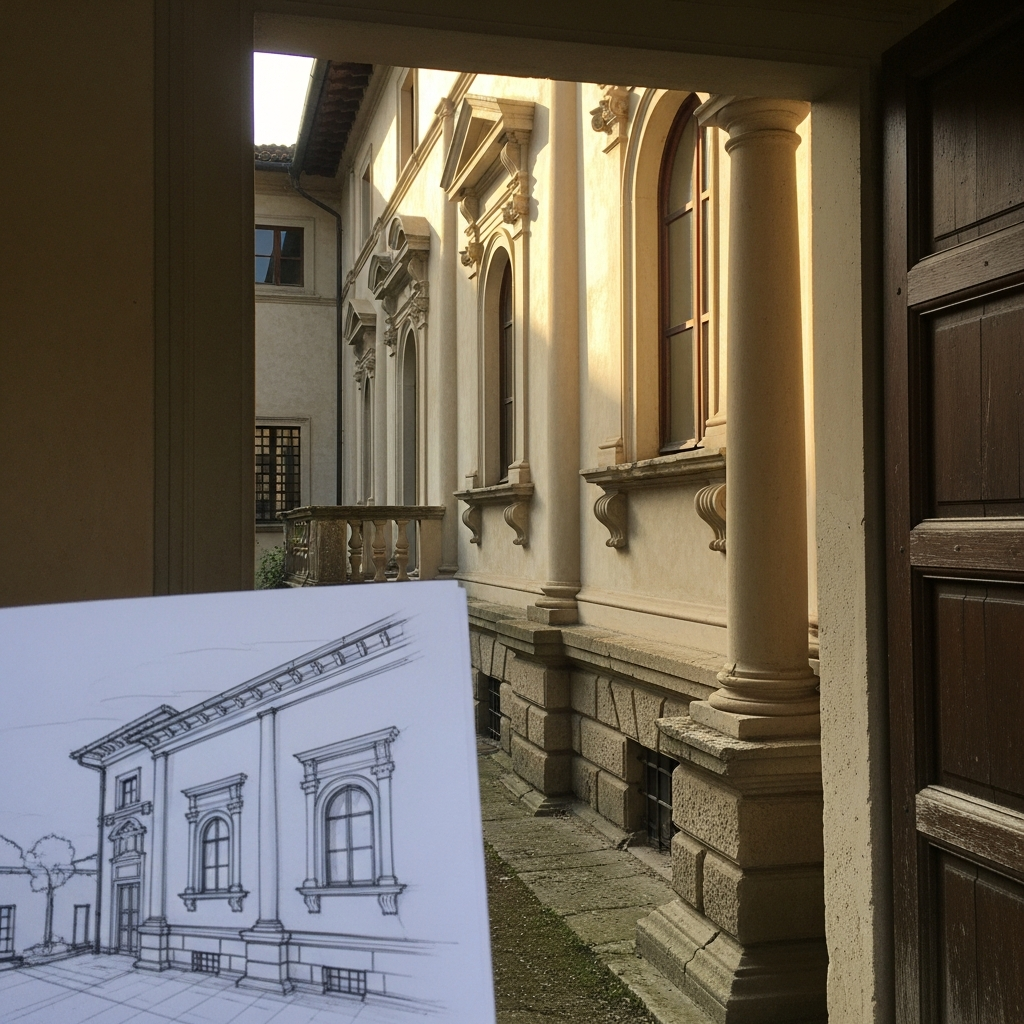
Italian Renaissance architecture represented a deliberate return to classical Roman ideals after the elaborate complexity of Gothic design. Architects studied ancient ruins, measured Roman temples, and developed theoretical frameworks that connected building design to mathematics, philosophy, and cosmic order. The resulting architecture emphasized balance, clarity, and the harmonious integration of parts into unified wholes.
Defining Characteristics
Italian Renaissance homes present themselves with commanding symmetry. The facade typically organizes around a central entrance, with windows arranged in precise alignment both horizontally and vertically. This mathematical regularity wasn’t mere aesthetic preference but philosophical statement: a well-proportioned building reflected universal harmony and demonstrated its owner’s cultivation and taste.
The style employs classical architectural elements with scholarly precision. Pilasters, columns, cornices, and entablatures follow rules established by ancient Roman precedent and codified by Renaissance theorists. Windows often feature elaborate surrounds with triangular or segmental pediments. Entrance doorways receive special emphasis, frequently framed by columns supporting decorated entablatures.
Rusticated stone or stucco exteriors give Italian Renaissance buildings their characteristic weight and permanence. The ground floor often features heavily textured rustication, with smoother surfaces on upper levels. This gradient creates visual stability while adding textural interest to otherwise formal facades.
American Interpretations
Italian Renaissance architecture arrived in America during the late 19th century, when Gilded Age patrons sought European sophistication for their new fortunes. McKim, Mead & White, the preeminent American architectural firm of the era, created Italian Renaissance masterpieces that established the style for a generation. Their work demonstrated that Renaissance principles could adapt to American conditions while maintaining essential character.
The style proved particularly popular for grand urban and suburban residences. Its formal symmetry suited the prominent sites and social aspirations of wealthy clients. The vocabulary of columns, pediments, and classical ornament conveyed cultural authority while remaining accessible to American tastes formed by democratic ideals.
California architects developed distinctive regional interpretations, combining Renaissance formality with Mediterranean informality. The resulting designs featured Renaissance facades opening onto courtyards and gardens that connected indoor and outdoor living in ways the original Italian models only suggested.
Proportional Systems
The enduring appeal of Italian Renaissance design stems partly from its sophisticated proportional systems. Renaissance architects believed that certain mathematical ratios produced inherent beauty, that a facade with windows properly proportioned to walls and rooms sized according to geometric relationships would satisfy viewers regardless of their theoretical knowledge.
These systems continue informing the best contemporary Renaissance-inspired designs. The ratio of window width to height, the spacing of columns, the height of floors relative to their width all follow principles established five centuries ago. When these proportions are correctly applied, buildings achieve a sense of rightness that transcends fashion.
Contemporary Relevance
Today’s architects creating Italian Renaissance homes must balance historical accuracy with contemporary functionality. Original Renaissance buildings featured enfilades of formal rooms unsuited to casual modern living. Floor plans must adapt while maintaining the style’s essential symmetry. Modern materials can simulate traditional stonework, but the best results come from understanding the principles rather than merely copying details.
For clients seeking homes of unambiguous quality and timeless sophistication, Italian Renaissance architecture offers proven solutions. Its emphasis on proportion, symmetry, and classical reference creates buildings that project authority without ostentation. Five centuries of continuous influence testify to the style’s enduring validity.




Stay in the loop
Get the latest classic architecture today updates delivered to your inbox.