Craftsman Bungalow: Basics and History
Craftsman bungalows have gotten romanticized and oversimplified in equal measure — every small house with a porch gets called a Craftsman bungalow these days, which makes it harder to appreciate what actually distinguishes the genuine article. As someone who has spent years studying these homes and hunting through older neighborhoods for the real thing, I learned everything there is to know about what makes a Craftsman bungalow what it is. Today, I will share it all with you.
The Craftsman bungalow emerged in the early 20th century as part of the broader Arts and Crafts movement. It stood in deliberate contrast to the ornate, fussy Victorian homes that preceded it — and that contrast was the point. Every design choice was a statement about values: simplicity over excess, quality over quantity, honest materials over applied ornament.
Origins of the Craftsman Bungalow
The Arts and Crafts movement began in England during the late 19th century, largely as a reaction against the Industrial Revolution and the cheap, mass-produced goods it was flooding into homes. William Morris and his contemporaries argued for the value of handcrafted objects made with care and skill. Gustav Stickley brought those ideas to America, publishing The Craftsman magazine starting in 1901 and essentially evangelizing this design philosophy to a middle-class American audience that was genuinely receptive to it.
The bungalow form — single-story or story-and-a-half, with a prominent front porch and manageable footprint — was the perfect vehicle for these ideas. It was affordable enough for middle-class families, practical enough for actual daily life, and honest enough in its construction to embody the movement’s values. This combination made the Craftsman bungalow an American icon during the first three decades of the 20th century.
Key Features of the Exterior
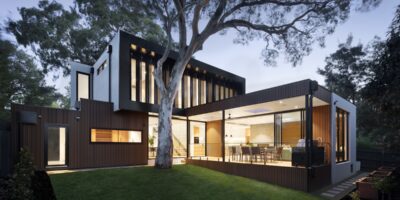
- Low-pitched gable roofs that hug the horizon rather than reaching upward dramatically
- Wide eaves with exposed rafters that celebrate rather than hide the structure
- Tapered or square columns supporting the porch, often sitting on masonry piers
- Natural materials — wood, stone, brick — that look like they belong to the landscape
Key Features of the Interior
- Open floor plans that connect living spaces without fragmenting them
- Built-in furniture and fixtures: bookcases flanking the fireplace, breakfast nooks, window seats
- Natural wood finishes that celebrate rather than obscure the material
- Fireplaces with prominent mantels as the room’s organizing focal point
Construction Techniques
Wood is the primary material, prized for versatility and warmth. The joinery techniques favored by Craftsman builders — mortise and tenon, dovetail joints, tongue and groove boards — are genuinely superior construction methods that happen to look beautiful when left exposed. This is a key distinction: in Victorian architecture, the structure was hidden and decoration was applied over it. In Craftsman work, the structure itself is the decoration.
Probably should have led with this section, honestly, because the construction philosophy explains everything else about why these homes look the way they do. Natural stone for foundations and chimneys — durable, visually harmonious with the landscape. Exposed beams and handcrafted cabinetry throughout the interior — adding warmth and texture that no amount of applied ornament could achieve.
Regional Variations
That is what makes Craftsman bungalows endearing to us architecture enthusiasts — the way the core philosophy adapted to local conditions and materials across the country. California Craftsman homes often show Spanish influence: stucco exteriors, red tile roofs. Midwest examples tend toward Prairie-style influences with more pronounced horizontal lines. Each region adapted the basic principles to suit local climate and materials, producing a rich diversity of homes that nonetheless share a recognizable architectural language.
Restoration and Modern Living
I am apparently the kind of period-specific person who insists on using appropriate materials in restoration work, and sourcing historically accurate hardware works for me while using modern substitutes that do not quite match the originals never does. Restoring a Craftsman bungalow well requires understanding what was original and making deliberate choices about what to preserve versus what to update. The goal is striking the balance between historical integrity and contemporary livability — and it is a balance that can absolutely be achieved.
Modern kitchens and bathrooms can be integrated without destroying the character of the original architecture. The key is using materials and proportions that are in conversation with the existing woodwork and built-ins rather than fighting against them.
Furniture and Decor
Stickley furniture remains the canonical choice for a reason — its simple lines, solid construction, and emphasis on natural materials are in perfect harmony with the architecture. Earthy color palettes echo the natural world the design philosophy was rooted in. Handcrafted accessories, pottery, textiles, and stained glass complete the picture without overwhelming it. The goal is complement, not competition.
The Craftsman Bungalow in Popular Culture
These homes appear constantly in film and television precisely because they communicate a specific feeling — warmth, craftsmanship, genuine character — that is immediately recognizable even to viewers who could not name the architectural style. That quality is not accidental. It is the result of a design philosophy that prioritized human-scale spaces, honest materials, and careful craftsmanship over impressiveness for its own sake.


Stay in the loop
Get the latest wildlife research and conservation news delivered to your inbox.