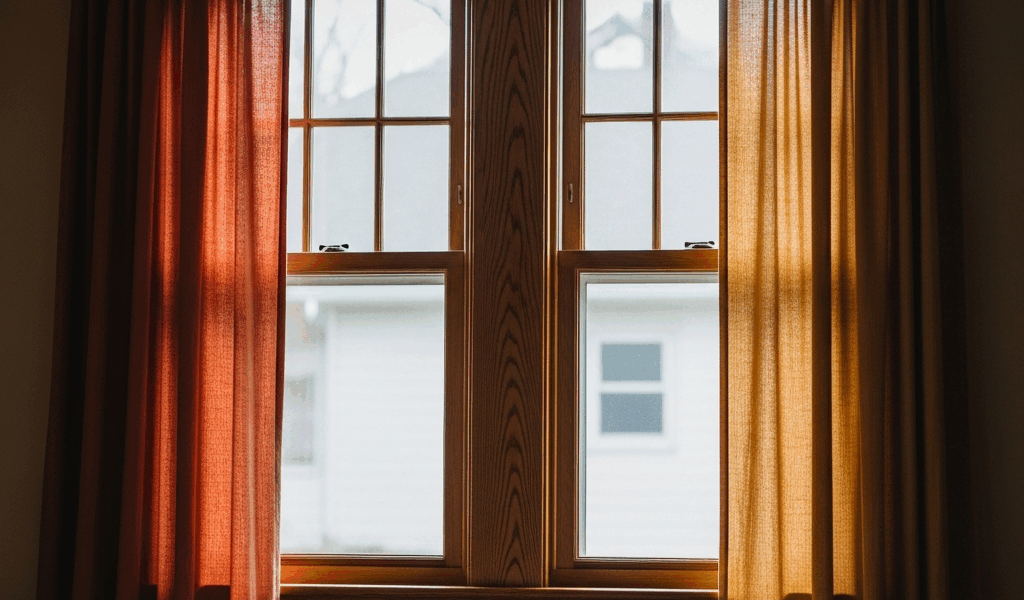
You’ve got a Craftsman bungalow with those beautiful divided-light windows, and every curtain you’ve looked at online feels wrong. Too fussy, too modern, or too generic. That instinct is correct — Craftsman homes have a specific window treatment vocabulary, and most of what you’ll find at a big box store violates it. Here’s what actually works.
What Made Craftsman Era Curtains Different
The Arts and Crafts movement that produced Craftsman architecture had strong opinions about everything in the home, including window treatments. The philosophy was simple: honest, unfussy, and functional. No Victorian swags. No heavy drapery with tassels and fringe. No lace. The window was considered a piece of architecture in its own right — those divided lights with their geometric patterns were meant to be seen, not hidden behind layers of fabric.
This means Craftsman curtains serve a supporting role. They soften the light, provide privacy when needed, and add warmth through texture and color — but they never compete with the windows themselves. Keep that principle in mind and every other decision gets easier.
The Best Curtain Styles for Craftsman Windows
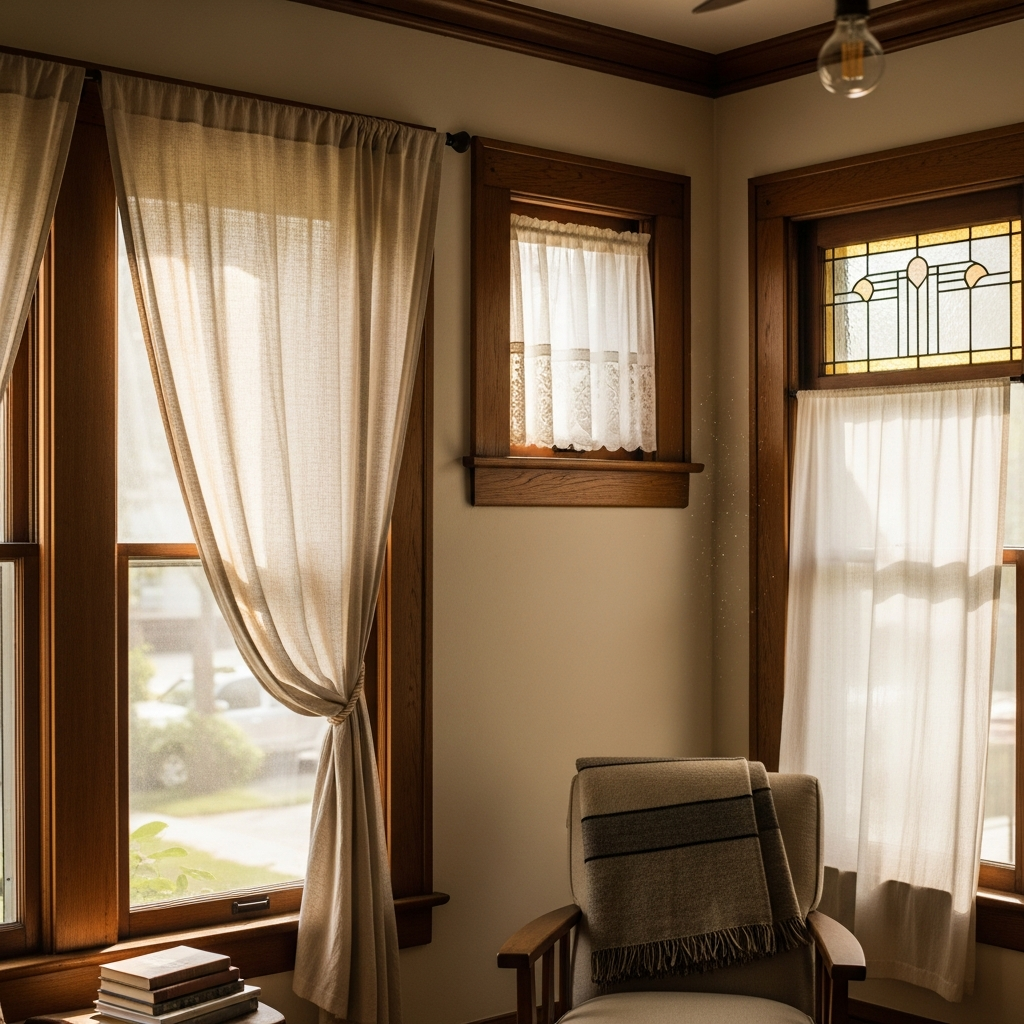
Flat panels in natural fabric: This is the gold standard. Simple rectangular panels in linen, cotton, or a linen-cotton blend, hung straight with minimal gathering. The fabric should have weight and texture — not sheer, not stiff. A medium-weight linen in a warm earth tone does more for a Craftsman living room than any elaborate treatment could.
Tab-top or rod-pocket construction: The hardware should disappear. Tab tops loop over the rod and let the panel hang flat. Rod pockets conceal the rod entirely. Either approach keeps the focus on the window and the fabric, not on decorative rings or clips. Hidden hardware was the period preference.
Simple Roman shades: Flat Roman shades (not the balloon variety) in a woven natural fabric work beautifully in Craftsman homes, especially in bedrooms and bathrooms where full privacy is needed. When raised, they stack neatly at the top of the window. When lowered, they present a clean, flat surface.
Cafe curtains: Half-height panels covering only the lower portion of the window. These were common in Craftsman kitchens and breakfast nooks — they provide privacy at eye level while letting light in through the upper panes. Hung from a simple tension rod or small bracket rod at the window’s midpoint.
Fabric patterns that work: Subtle geometrics, William Morris-inspired botanical prints (stylized, not photographic), and simple woven textures. Avoid large florals, toile, checks, and anything with a pattern that reads as colonial, Victorian, or modern farmhouse.
Craftsman Hardware — Rods, Rings, and Brackets
The curtain rod is as much a design decision as the fabric. Period-appropriate hardware for Craftsman homes:
Wrought iron: Simple round or square-profile rods with minimal finials — a plain ball or a flat cap. The iron should look hand-forged, not polished to a mirror shine. Matte black or dark bronze finish.
Oil-rubbed bronze: The most widely available finish that works in a Craftsman context. Warm, slightly antiqued, and complementary to the oak trim and warm wall colors.
Hammered bronze or copper: For homes where the hardware will be visible (tab-top panels), hammered metal brackets and rods add a handcrafted quality that aligns perfectly with the Arts and Crafts ethic.
What to avoid: Chrome, polished nickel, brushed stainless, or any finish that reads as contemporary. Decorative finials with scrollwork, crystal, or ornate detailing — these are Victorian or French Provincial, not Craftsman. Glass or acrylic rods — too modern by decades.
Colors That Work — The Period Palette for Window Treatments
Craftsman curtain colors should feel like they belong to the same family as the wall colors and woodwork. The Arts and Crafts palette for textiles is warm, muted, and nature-derived:
Best options: Warm ecru and natural linen (the most versatile choice), gold and antique gold, sage green, olive, terra cotta, warm brown, dusty rust. These colors work with the oak trim and earth-toned walls that define Craftsman interiors.
Avoid: Bright white (too stark against warm woodwork), pastels of any kind, cool neutrals like silver-gray or icy blue, and anything neon or highly saturated. The curtain should look like it could have been woven from natural fibers and dyed with plant-based dyes — even if it wasn’t.
Room by Room — Living Room, Bedroom, Kitchen
Living room: Full-length flat panels flanking the windows, extending from just below the crown molding (or rod placement at ceiling height) to just above the floor. One panel per side of the window, pulled back to frame the divided lights. Fabric weight: medium to heavy linen. Color: coordinate with the wall color — if walls are warm green, curtains in gold or ecru complement without competing.
Bedroom: Privacy matters here. Simple Roman shades or full-length panels that can close completely. For rooms where light control is important, a flat Roman shade in a heavier linen with a blackout liner is the most period-appropriate solution. The liner is hidden behind the face fabric and doesn’t change the aesthetic from the room side.
Kitchen: The Craftsman kitchen philosophy favored maximum natural light. Many period kitchens had no curtains at all — the window was simply left open to the light. If you want coverage, short cafe curtains at the lower half of the window are the most historically appropriate option. Keep them in a simple cotton or light linen, and use a plain tension rod. Anything more elaborate fights the utilitarian character of a Craftsman kitchen.
Bathroom: A simple Roman shade or a half-cafe curtain in moisture-resistant cotton. Avoid anything that will absorb and hold humidity. Keep it minimal — the bathroom in a Craftsman home was designed as a purely functional space, not a decorating opportunity.



Stay in the loop
Get the latest classic architecture today updates delivered to your inbox.