
There’s something irresistibly romantic about a Tudor Revival home. Those decorative half-timbers crossing steeply pitched roofs, the massive stone chimneys, the diamond-paned windows glinting in afternoon light speak to a deep human longing for shelter, security, and connection to the past. Little wonder these homes continue commanding premium prices in markets across America.
Tudor Revival architecture flourished in the United States between 1890 and 1940, reaching its peak during the prosperous 1920s. Architects adapted English medieval building traditions for American clients who sought the romance of the English countryside without the drafty discomforts of genuine medieval construction. The result was a distinctly American interpretation that emphasized visual drama while incorporating modern conveniences.
The Essential Elements
Authentic Tudor Revival homes share several defining characteristics that distinguish them from casual imitations. The steeply pitched roof, typically exceeding 45 degrees, creates the style’s characteristic silhouette and often features multiple gables, dormers, and dramatic cross-gables. Originally, these steep pitches shed rain and snow effectively from thatch roofs; in American interpretations, they became purely aesthetic statements.
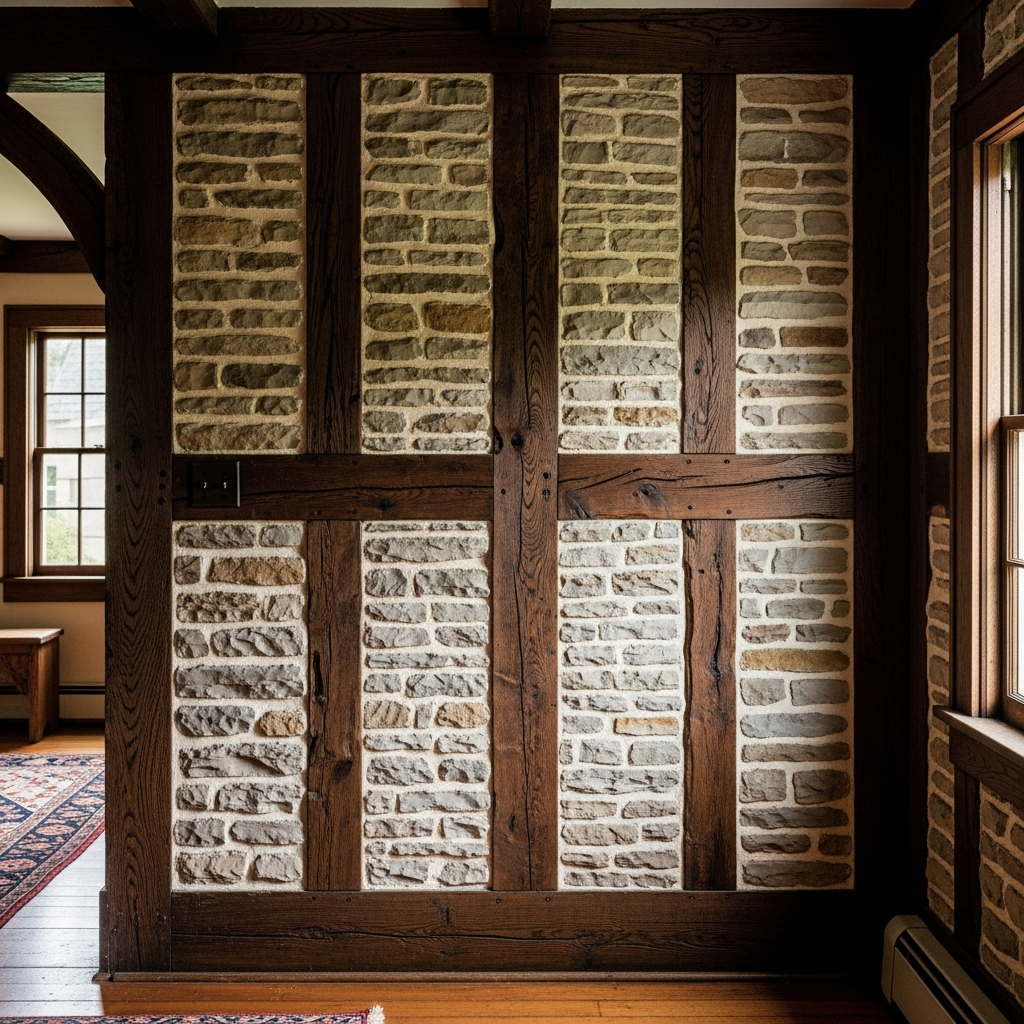
Half-timbering, the exposed wooden framework filled with stucco or masonry, provides the most recognizable Tudor feature. In genuine medieval construction, this framework was structural. In Tudor Revival homes, the timbers are usually decorative, applied to conventional frame or masonry walls. The best examples use authentic hand-hewn timbers or high-quality reproductions; lesser versions employ thin dimensional lumber that never achieves the proper presence.
Prominent chimneys, often featuring decorative brickwork or stonework, anchor Tudor compositions. The chimney served as the heart of the medieval home, and Tudor Revival architects emphasized this element with elaborate designs that sometimes included multiple flues, ornamental caps, and chimney pots.
Regional Variations
Tudor Revival developed distinct regional personalities across America. In the wealthy suburbs of the Northeast and Midwest, stone-clad versions with slate roofs created estates of considerable grandeur. Detroit’s Palmer Woods and Philadelphia’s Main Line neighborhoods feature exceptional examples where automotive and industrial fortunes built English manor houses in American settings.
Pacific Northwest builders adapted the style to local materials, using native stone and timber in ways that created particularly handsome regional variations. The Pacific Northwest’s damp climate actually suits Tudor aesthetics, with moss-covered roofs and weathered timbers achieving over time the aged appearance that East Coast versions must simulate.
Even more modest Tudor Revival homes, the countless “Tudorbethan” cottages built in subdivisions across America, incorporated simplified versions of the style’s essential elements. These smaller homes, with their arched doorways, steep rooflines, and token half-timbering, demonstrate the style’s adaptability across price points.
Why Premiums Persist
Real estate professionals consistently report that well-preserved Tudor Revival homes outperform comparable properties in other styles. Several factors drive this premium. The style’s association with English aristocratic traditions carries cultural cachet that resonates with certain buyers. The architectural vocabulary photographs exceptionally well, with dramatic rooflines and textured facades creating immediate visual interest.
More practically, Tudor Revival homes often feature superior construction quality. Built during an era when craftsmanship mattered, many examples feature solid masonry construction, hand-crafted woodwork, and attention to detail rarely found in contemporary construction. Original leaded glass windows, hand-carved mantels, and custom ironwork contribute to a sense of quality that newer homes struggle to match.
Preservation and Adaptation
Preserving Tudor Revival homes for contemporary use requires balancing historic character with modern functionality. The dark, compartmentalized floor plans that characterized the style can be carefully opened while maintaining period details. Outdated mechanical systems can be replaced without disturbing ornamental plasterwork or original hardware.
The key is finding architects and contractors who understand the style’s essential character. A Tudor Revival home loses much of its value when “renovated” into something generic. The buyers who pay premium prices seek authenticity, and authenticity requires knowledgeable stewardship.
For those fortunate enough to own or acquire a Tudor Revival home, the reward is living within architecture that connects daily life to centuries of building tradition. That connection, increasingly rare in our disposable age, proves more valuable with each passing year.




Stay in the loop
Get the latest classic architecture today updates delivered to your inbox.