You’ve felt it, even if you couldn’t explain it. Walking up to certain buildings, something just feels right. The proportions, the balance, the way the parts relate to the whole, these qualities register in your mind before conscious thought engages. This isn’t mere preference or cultural conditioning. Research in neuroscience and environmental psychology increasingly suggests that symmetry affects human perception at a fundamental level, and classical architects understood this long before scientists could prove it.
The Biological Basis of Beauty
Humans are hardwired to respond to symmetry. Studies using brain imaging technology show that symmetrical patterns activate the brain’s reward centers more strongly than asymmetrical ones. Infants just hours old preferentially gaze at symmetrical faces. Across cultures and throughout history, people consistently rate symmetrical arrangements as more beautiful than asymmetrical alternatives.
Evolutionary psychologists offer an explanation: symmetry signals health and genetic fitness. Faces and bodies develop symmetrically when organisms thrive; asymmetry often indicates developmental stress, disease, or genetic problems. Our ancestors who preferred symmetrical mates likely produced healthier offspring, embedding symmetry preference deep in our neural circuitry.
This preference extends beyond faces to environments. Research shows that people experience lower stress, report greater comfort, and demonstrate improved cognitive performance in symmetrical spaces compared to asymmetrical ones. The symmetry doesn’t need to be perfect to trigger these effects; even approximate balance produces measurable benefits.
Classical Architects Knew
Long before neuroscience, classical architects intuited these principles and embedded them in their buildings. Greek temples achieved near-perfect bilateral symmetry, with columns, doorways, and sculptural programs balanced precisely across the central axis. Roman architects extended these principles to increasingly complex buildings while maintaining symmetrical organization.
The Renaissance formalized symmetrical design into explicit theory. Andrea Palladio’s Four Books of Architecture established symmetry as architecture’s fundamental organizing principle. His villa plans, with their precisely balanced wings and centralized great rooms, created templates that architects still reference today.
But classical architects went beyond simple mirror symmetry. They understood that proportion, the mathematical relationships between parts, affected perception as much as balance. Columns weren’t merely identical; their heights related to their diameters according to specific ratios. Room dimensions followed geometric progressions. The spaces between windows related to the windows themselves through calculable formulas.
Why Modern Buildings Sometimes Fail
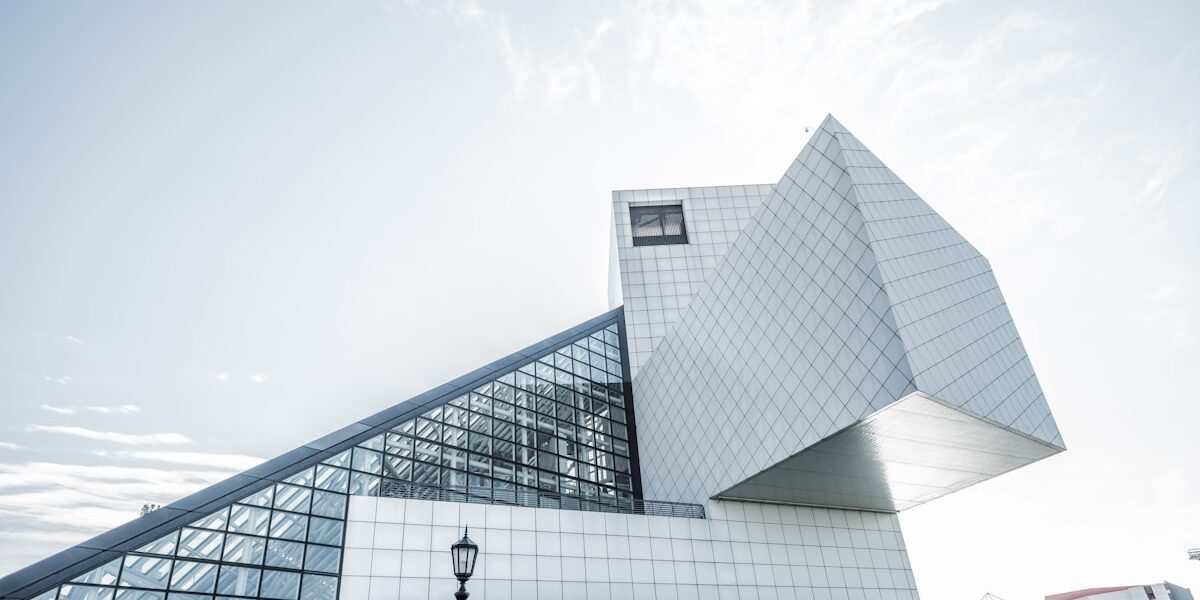
Modernist architecture often rejected symmetry as a vestige of outdated traditions. Asymmetrical compositions, deliberately unbalanced masses, and irregular rhythms became hallmarks of avant-garde design. While these approaches produced some masterworks, they also produced many buildings that left ordinary users feeling uneasy without understanding why.
The problem isn’t that asymmetry can’t work. Skilled designers create brilliant asymmetrical compositions that achieve dynamic balance through careful arrangement of visual weight. But achieving this balance requires exceptional skill and sensitivity. Symmetry, by contrast, provides a nearly foolproof framework for creating buildings that feel right to most people most of the time.
Practical Applications
Understanding symmetry’s psychological effects has practical implications for anyone designing, building, or buying a home:
Facades: Symmetrical front elevations consistently test better with buyers than asymmetrical alternatives. If true symmetry isn’t possible, near-symmetry often achieves similar effects.
Interiors: Balanced furniture arrangements, symmetrical window placements, and centered focal points create rooms that feel calmer and more ordered than chaotic alternatives.
Landscapes: Formal gardens with symmetrical plantings enhance classical homes by extending balanced compositions outdoors.
Beyond the Surface
Symmetry’s effects reach beyond conscious aesthetic judgment. Studies show that people navigating symmetrical environments find their way more easily and feel more oriented than in asymmetrical spaces. Symmetrical rooms feel larger than asymmetrical ones of identical dimensions. Even temperature perception shifts, with balanced spaces feeling more comfortable than chaotic ones at the same actual temperature.
Classical architects, working through intuition and tradition, discovered principles that modern science is only now explaining. The buildings they created weren’t merely fashionable for their time; they were tuned to fundamental features of human perception. That’s why classical architecture never feels truly dated, and why symmetrical buildings continue commanding premium prices centuries after their construction.
The next time a building just feels right, you’ll know why. Your brain is responding to patterns established millions of years ago, recognizing order, balance, and harmony that signal safety, health, and beauty. Classical architects learned to speak this language, and the conversation continues.