When Thomas Jefferson designed Monticello, he wasn’t merely building a home; he was making an architectural argument about American identity. His embrace of Palladian principles, derived from the 16th-century Italian architect Andrea Palladio, established a vocabulary of domes, porticos, and classical proportions that would define American ideas of wealth and cultivation for generations.
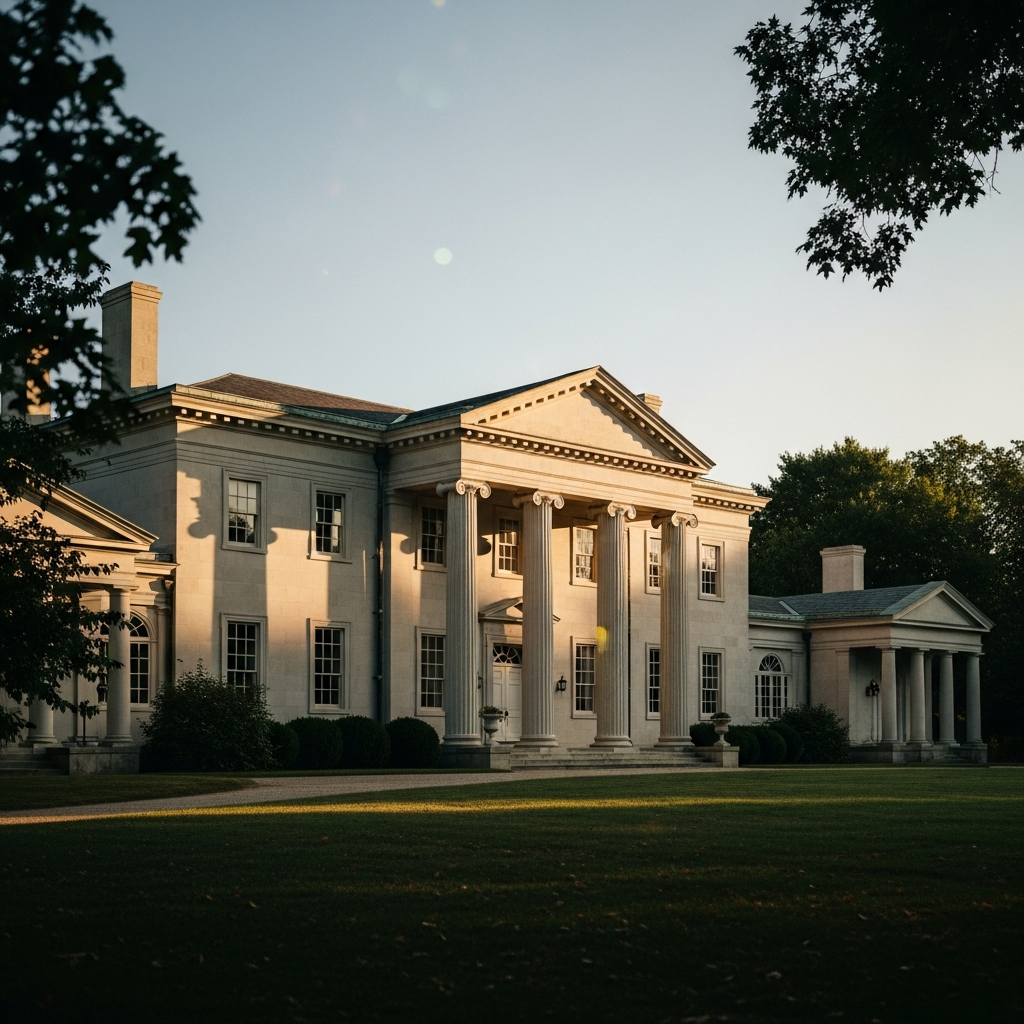
Andrea Palladio’s influence on Western architecture is difficult to overstate. His 1570 treatise “I Quattro Libri dell’Architettura” (The Four Books of Architecture) became the most influential architectural text ever published, shaping design from English country houses to American plantation homes. His villa designs, with their central temples fronts, symmetrical wings, and carefully calculated proportions, offered templates that architects continue adapting today.
The Palladian Formula
Palladio developed a remarkably adaptable architectural system based on a few essential principles. The temple front, with its triangular pediment supported by classical columns, served as the defining feature. This motif, derived from ancient Roman temples, announced the building’s importance while connecting it to classical traditions of civilization and learning.
Symmetry organized Palladian compositions absolutely. The facade’s left half mirrors its right. Windows align precisely. Wings balance across the central axis. This mathematical regularity wasn’t merely aesthetic but philosophical, reflecting Renaissance beliefs about universal harmony and the perfectibility of human endeavors.
Palladio also pioneered the integration of building and landscape. His villas connected to their agricultural settings through extended wings and dependencies that created unified compositions encompassing house, gardens, and working land. This integration proved particularly influential in America, where plantation owners sought to dignify their agricultural enterprises with classical authority.
Jefferson’s Vision
Thomas Jefferson encountered Palladian architecture through books and during his diplomatic service in France, where he saw firsthand the classical buildings that English Palladianism had transformed into an international style. He returned to Virginia determined to elevate American architecture beyond the colonial vernacular.
Monticello, begun in 1768 and revised repeatedly over four decades, embodied Jefferson’s evolving Palladian vision. The dome, the first on an American residence, announced ambition and cultivation. The classical portico, adapted from Roman temples, gave the entrance monumental presence. The careful proportions, derived from Palladian formulas, created harmonic relationships between every element.
Jefferson’s influence extended far beyond his own buildings. As Virginia’s unofficial architectural advisor and later as a founder of the University of Virginia, he promoted Palladian principles throughout the early Republic. His advocacy established a connection between classical architecture and American civic virtue that persists today.
Palladian Mansions Today
The Palladian vocabulary continues defining American ideas of residential grandeur. Contemporary architects designing substantial homes frequently turn to Palladian precedents, finding in their proportional systems and classical details a ready-made language of sophistication and permanence.
The temple-front portico remains the style’s most recognizable feature. Whether rendered in painted wood, stone, or stucco, this arrangement of columns supporting a triangular pediment instantly communicates classical authority. The best contemporary interpretations understand the proportional relationships that make this motif effective; lesser versions apply the elements without achieving proper scale.
Symmetrical compositions, extended wings, and Palladian windows (the tripartite arrangement with a central arched opening flanked by shorter rectangular ones) continue appearing in upscale developments across America. These elements, when correctly proportioned and thoughtfully detailed, connect modest homes to a tradition stretching from Renaissance Venice through Georgian England to Jefferson’s Virginia.
Investment in Permanence
Buyers of Palladian-inspired homes typically understand they’re acquiring more than square footage. The style’s classical associations confer cultural authority. Its proportional systems create spaces that feel inherently right. Its centuries of continuous use guarantee that the architecture will never seem dated in the way that stylistic novelties often do.
From Monticello to the mansions of Newport to the estates of today’s affluent suburbs, Palladian architecture has defined American wealth for 250 years. That remarkable longevity testifies to the enduring validity of principles established by a Renaissance Italian architect whose vision continues shaping the American landscape.




Stay in the loop
Get the latest classic architecture today updates delivered to your inbox.