What Makes Gothic Revival Different From Other Victorian Styles
Gothic Revival has gotten complicated with all the misinformation flying around — mostly from well-meaning people pointing at steep roofs and calling it a day. As someone who spent three years hunting houses in older neighborhoods, I learned everything there is to know about telling Victorian styles apart. Today, I will share it all with you.
A friend would stop in front of some peaked-roof house and say, “That’s Gothic Revival,” and I’d nod like I knew what I was looking at. I didn’t. Took me an embarrassingly long time to figure out why. Many Victorian-era homes share surface details — steep roofs, pointed trim, ornamental woodwork. That’s the whole problem. But true Gothic Revival stands apart in specific, measurable ways. Andrew Jackson Downing formalized the American version back in the 1840s through his design books — actual published volumes that homebuilders used like instruction manuals. You don’t need a history degree to spot the difference. You need to know where to look.
The Pointed Arch Is the Clearest Giveaway
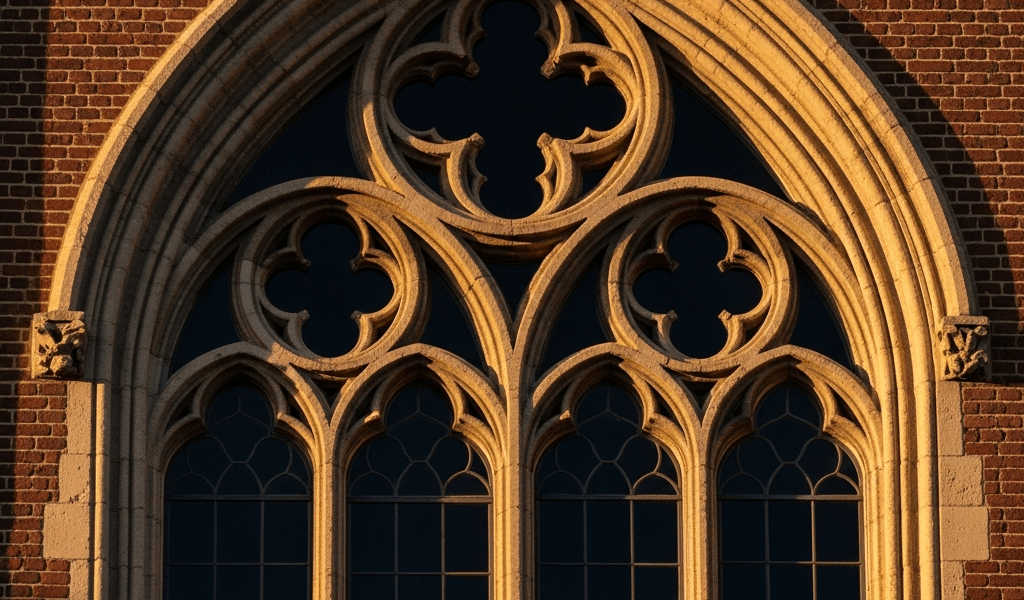
The pointed arch is your strongest single identifier. Not every peaked shape qualifies, though. Gothic Revival uses pointed arches that actually frame windows and doorways — they’re structural, or at minimum intentional architectural elements conceived from the beginning, not decorative trim nailed on afterward.
Stand across the street. Look at the windows. True Gothic Revival windows have that distinctive pointed shape — the arch rises to a sharp peak at center, almost like a shield silhouette. The glass itself sometimes follows that pointed form. Sometimes the casing creates the point. Either way, the whole opening was designed that way from the ground up.
Here’s where confusion happens, and it happens constantly. Carpenter Gothic homes — more common than most people realize — use pointed decorative elements too. But Carpenter Gothic just slaps pointed trim onto otherwise normal rectangular windows. The window stays rectangular. The point is purely applied to the frame or the gable above it. Ornamental dressing. Nothing more.
I toured a house on Maple Street once. 1860s construction, asking $485,000. That was the first time I actually saw the difference clearly in person. The windows had true pointed arches — the whole opening was conceived that way. Not retrofitted. Not dressed up. Designed.
Check doorways too. Gothic Revival front doors often sit beneath pointed arch openings — the arch rising above the door frame itself, sometimes creating a tall, almost dramatic entry. Ask yourself: does that pointed shape frame the actual opening, or is it just decoration sitting above it? That question alone eliminates half the confusion.
Steep Gables and Rooflines That Look Like They’re Reaching Upward
Probably should have opened with this section, honestly. The roofline is what catches your eye first anyway.
Victorian homes come in a thousand roof configurations — but Gothic Revival has a specific verticality. Pitch runs steep, usually past 45 degrees. Multiple gables break up the roofline, each one pointing dramatically upward. That’s not accident. It’s intentional proportioning, designed to pull the eye up and keep it climbing.
Stand on the sidewalk and just watch where your eyes go. Does the house make you look upward? Does the roofline want to keep rising? That’s the Gothic Revival effect. Other Victorian styles — Queen Anne, Second Empire, early Italianate — have pitched roofs too, but the overall composition feels more horizontal. Those houses spread outward. Gothic Revival reaches.
The gables themselves matter here. Multiple gables across the front elevation — not just at the ends — create that fragmented, vertical energy. Some houses have three or four prominent gables facing the street alone. That breaks the visual mass into vertical sections instead of one unified horizontal block. It’s a completely different feeling once you know to look for it.
That reaching, climbing quality is what separates Gothic Revival from its many imitators. Everything else just confirms what the proportions already told you.
Vergeboard and Decorative Woodwork That Sets It Apart
But what is vergeboard? In essence, it’s the lacy, cut-out woodwork that runs beneath the peak of each gable along the roofline edges — also called bargeboard, or gingerbread trim in casual conversation. But it’s much more than that when you’re using it to identify a style.
Gothic Revival uses vergeboard differently than Queen Anne or Folk Victorian. The patterns tend toward geometric restraint — pointed or lancet-shaped cutouts that echo the pointed arch theme showing up elsewhere on the house. It’s disciplined. Patterns repeat, creating rhythm rather than visual chaos. Not the wild, exuberant profusion you’d see on a Queen Anne.
Don’t make my mistake. I once toured a property where the realtor kept saying, “Oh, look at all that beautiful trim work,” and I mentally filed it as Gothic Revival because of the ornate details. Turns out it was Carpenter Gothic with heavy surface decoration and almost nothing genuine underneath. The roof was actually modest. Proportions felt wrong. The vergeboard was doing all the work — trying to make a simple structure look like something it wasn’t. I’m apparently detail-blind at first glance, and focusing on trim before structure never works for me while starting with the roofline always does.
In true Gothic Revival, vergeboard complements a larger architectural story already being told. The steep gables are there. The pointed arches are framing windows. The vergeboard adds detail, but the bones of the style show up in those bigger elements first. Queen Anne drowns everything in trim — up the corners, across porches, under every eave. Folk Victorian does the same. Gothic Revival? Specific. Purposeful. The patterns feel architectural rather than decorative.
Quick Checklist Before You Call It Gothic Revival
So, without further ado, let’s dive in — use this to confirm what you’re actually looking at:
- Pointed arches frame windows or doorways (not just applied as trim above them)
- Roofline pulls your eye upward consistently (multiple steep gables, not one unified pitch)
- Steep roof pitch (typically 45 degrees or steeper — bring a phone app if you want to measure)
- Restrained, geometric vergeboard patterns (not wild ornamental excess)
- Vertical proportions dominate (the house feels taller than it feels wide)
- Windows and doors align with the style’s geometric intent (everything feels planned, not just decorated)
- Overall scale and massing reflect 1840s–1870s sensibilities (not the later, heavier Victorian silhouettes)
Five or six boxes checked? You’re almost certainly looking at Gothic Revival. Three or four? Start reconsidering — Carpenter Gothic, Folk Victorian, or early Tudor Revival all become real possibilities. One or two? Something else entirely. Maybe just a Victorian house with an aggressive roof and good trim.
That’s what makes Gothic Revival endearing to us architecture nerds — it rewards people who actually stop and look. Step back. Check proportions before you check details. Trim matters. Arches matter. But that reaching, vertical feeling is what makes the identification. Everything else is just confirmation.

Stay in the loop
Get the latest classic architecture today updates delivered to your inbox.