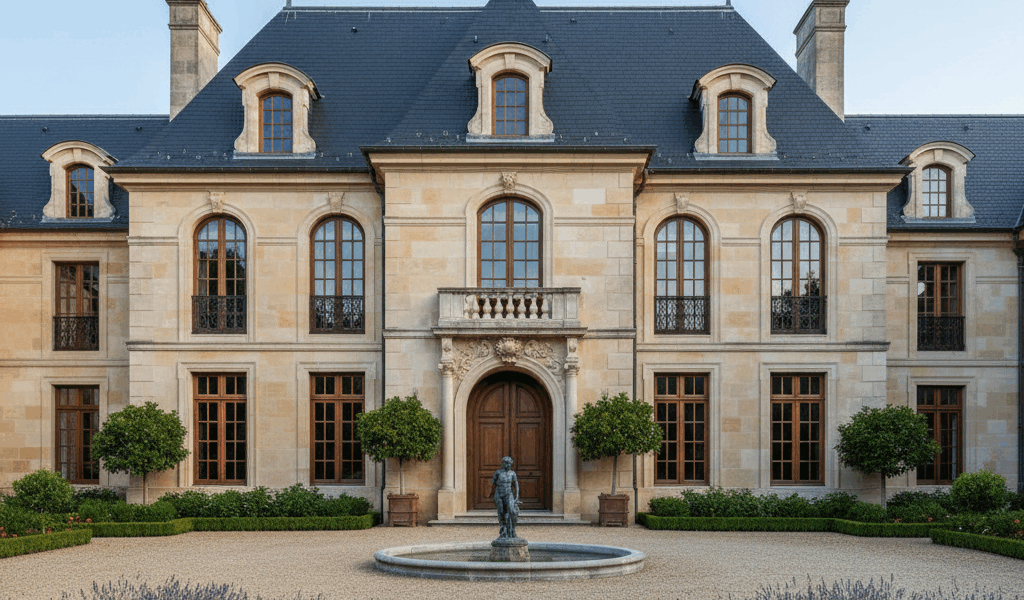
Among the varied architectural styles that captured American imaginations during the early 20th century, French Provincial stands apart for its understated elegance. Where Tudor Revival homes shout their presence with dramatic half-timbering and Mediterranean styles announce themselves with red tile roofs, French Provincial whispers its refinement through subtle curves, careful proportions, and sophisticated restraint.
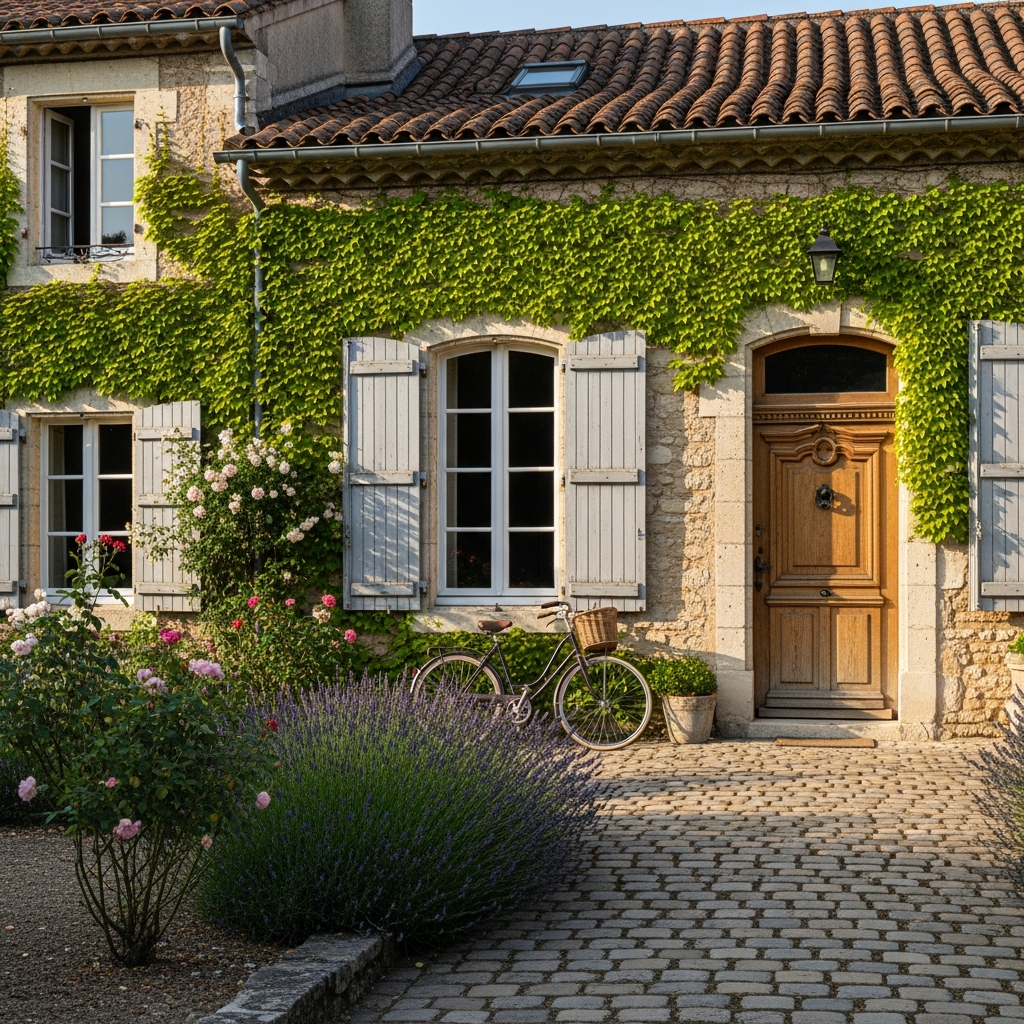
The style emerged during the 1920s as American architects looked to the rural manors of France’s Normandy, Brittany, and Loire Valley regions for inspiration. Unlike the formal grandeur of French Baroque or the ornate complexity of French Renaissance, Provincial design drew from vernacular traditions of prosperous farmers and country gentry. The resulting American interpretations combined this rustic sophistication with modern convenience.
The Signature Curves
French Provincial homes announce themselves most distinctly through their rooflines. The characteristic hipped roof, steeply pitched and often flaring slightly at the eaves, creates a silhouette of gentle elegance unknown in other residential styles. Some examples feature the distinctive bell-cast curve at the roof’s edge, where the pitch decreases just before meeting the wall, adding a touch of softness that defines the style’s personality.
Dormers, usually featuring curved or arched tops, punctuate these rooflines with rhythmic regularity. Unlike the angular dormers of Colonial or Tudor homes, French Provincial dormers often display the same gentle curves that characterize the main roof, creating unified compositions of unusual grace.
Chimneys in French Provincial design typically feature brick or stone construction with simplified caps, positioned to enhance the roof’s balanced composition. The restraint is intentional: where other styles use the chimney as a dramatic focal point, French Provincial integrates it into the overall design as one element among many.
Materials and Textures
Authentic French Provincial homes typically feature stucco, brick, or stone exteriors, often in combination. The original French models used local stone extensively, and American interpretations frequently incorporate limestone or fieldstone elements, particularly around entrances and at the building’s base. Stucco, when used, tends toward warm cream tones rather than the brilliant white of Mediterranean styles.
Windows in French Provincial design are usually tall and narrow, with multiple panes and simple surroundings. The style avoids the heavy trim and elaborate headers common to other traditional approaches, preferring instead to let the windows speak through their proportions rather than their ornamentation.
Roofing materials varied in American interpretations. Slate created the most refined appearance, but barrel tile, wood shake, and eventually asphalt shingles served more modest examples. The key is achieving the proper steep pitch and, ideally, the characteristic flare at the eaves.
Interior Character
French Provincial interiors typically feature plastered walls, often with subtle texture, and ceilings that may incorporate exposed wooden beams. Unlike the heavy, dark beams of Tudor interiors, French Provincial beams tend toward lighter finishes and more refined proportions. Floors of wide-plank wood, stone, or terracotta tile complement the style’s rustic sophistication.
Fireplaces often serve as focal points, but with characteristically French restraint. Limestone surrounds with simple carved mantels replaced the elaborate overmantels and ornate carvings of English-derived styles. The goal was elegance through proportion and material quality rather than applied decoration.
Contemporary Appeal
French Provincial homes appeal to contemporary buyers seeking traditional architecture without the formality of Georgian or the drama of Tudor. The style’s emphasis on proportion and quality over ostentation aligns with current tastes that favor understated sophistication. The neutral color palette and simplified ornamentation provide versatile backdrops for varied decorating approaches.
Recent construction has seen renewed interest in French Provincial design, with architects creating interpretations that maintain the style’s essential character while incorporating open floor plans and modern amenities. The best examples understand that French Provincial’s appeal lies not in specific details but in overall composition, proportion, and the indefinable quality of refined restraint.
For homebuyers drawn to traditional architecture but wary of styles that might feel overwhelming, French Provincial offers an elegant middle path. Its soft curves and sophisticated proportions create homes that feel both timeless and welcoming, substantial yet never overbearing.




Stay in the loop
Get the latest classic architecture today updates delivered to your inbox.